
From variety selection to harvest — field-proven practices for Mediterranean tomato production.
Introduction
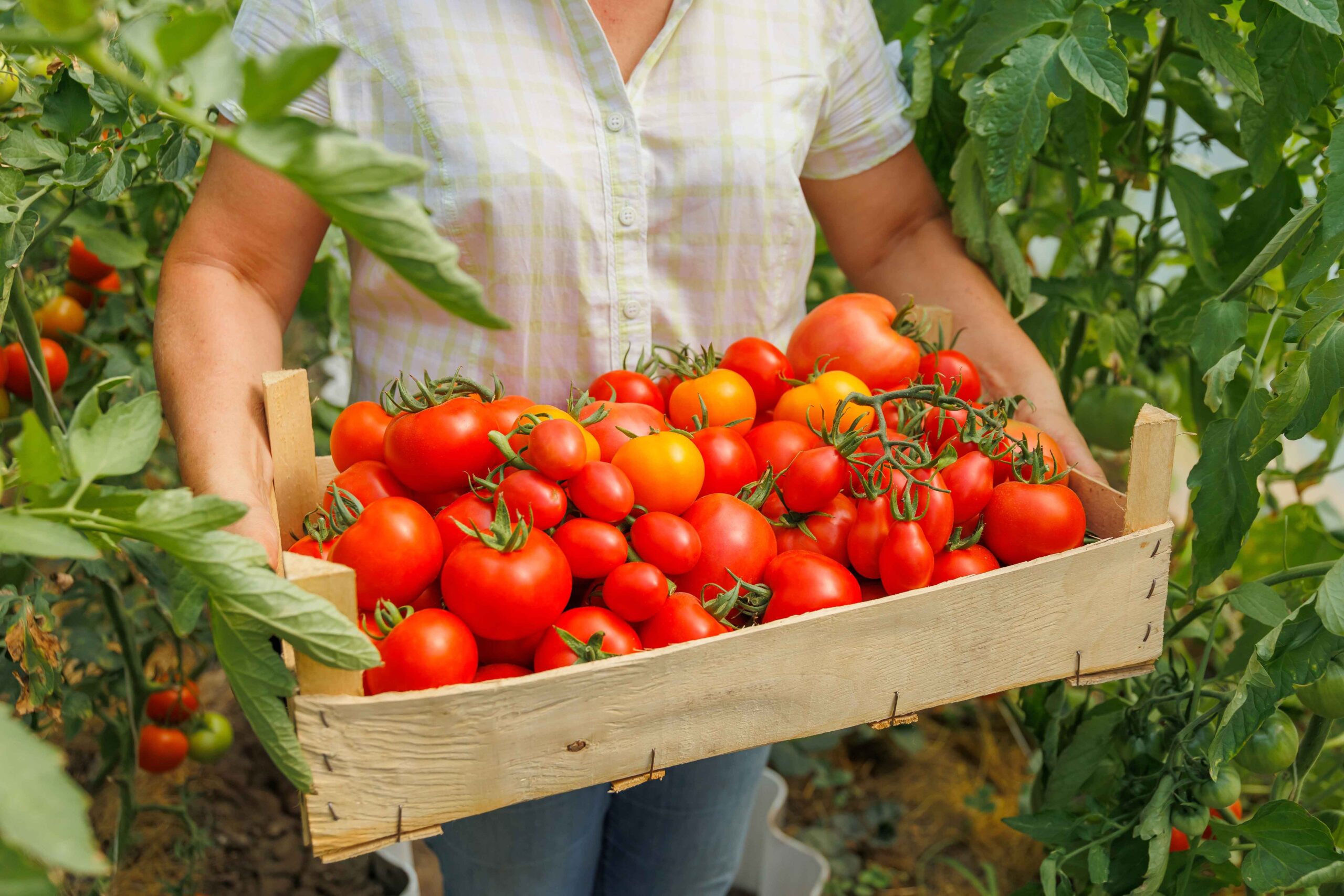
Tomatoes are the most economically important vegetable crop in Lebanon and among the most demanding. Susceptible to a wide range of diseases, sensitive to environmental stress, and requiring precise water and nutrition management, successful tomato production rewards knowledge and punishes shortcuts. This guide distills decades of field experience into practical recommendations for Lebanese growing conditions.
Variety Selection and Planting Schedule
Choose varieties with TYLCV, Fusarium (races 1, 2, 3), Verticillium, and nematode resistance as minimum requirements. For open-field Bekaa production, select determinate types for early season and indeterminate for extended harvest. For coastal greenhouses, indeterminate cluster and large-fruit hybrids dominate. The Lebanese calendar: coastal open-field transplanting February–April, harvest May–August.Bekaa transplanting mid-April–May, harvest July–October. Greenhouse production year-round.
Soil Preparation and Transplanting
Prepare beds 3–4 weeks ahead. Incorporate 20–30 tonnes/ha composted organic matter.
Apply base fertilizer according to soil test — not a standard recipe. Form raised beds for drainage.
Install drip irrigation before transplanting.
Transplant in late afternoon to reduce shock. Water immediately to settle soil. Mulch to suppress weeds, conserve moisture, and reduce soil-splash disease.
Irrigation and Nutrition
Tomatoes require 5–8 mm/day at peak demand. Irregular irrigation causes blossom-end rot and cracking. Maintain consistent moisture with monitoring.
Nitrogen drives vegetative-reproductive balance. High N during establishment, reduce during flowering, increase K during fruit filling. Calcium through fertigation prevents blossom-end rot.
Pest and Disease Management
Primary pests: whitefly (TYLCV vector), Tuta absoluta, thrips, spider mites, aphids. Implement IPM: resistant varieties, pheromone traps, biological control, targeted chemistry. Fungal diseases respond to prevention: ventilation, drip irrigation, spacing, preventive fungicide programs with mode-of-action rotation. Bacterial diseases have no cure — prevention through clean transplants and copper sprays is the only approach.
Conclusion
Successful Lebanese tomato production requires attention at every stage. Master the fundamentals — variety, water, nutrition, proactive pest control — and the tomato crop rewards the investment generously.
Key Takeaways
- TYLCV and nematode resistance are non-negotiable variety requirements.
- Consistent drip irrigation prevents more quality problems than any other practice.
- Nitrogen-potassium balance must shift through the season to match crop stage.
- Tuta absoluta requires season-long IPM, not single interventions.