
Introduction
Fertilizers are the most widely purchased agricultural input in the Middle East, yet they remain
one of the most misunderstood. The assumption that more fertilizer equals more yield has cost
farmers across Lebanon and the region billions in wasted inputs while degrading soil and
contaminating water resources.
This article breaks down the science of fertilizer-crop interactions, addresses common mistakes
in Mediterranean farming systems, and provides actionable guidance for optimizing nutrient
management.
How Plants Use Nutrients
Plants require 17 essential elements to complete their life cycle. Three come from air and water.
The remaining 14 must come from soil or supplemental fertilization — divided into
macronutrients (nitrogen, phosphorus, potassium, calcium, magnesium, sulfur) and
micronutrients (iron, manganese, zinc, copper, boron, molybdenum, chlorine, nickel).
Liebig’s Law of the Minimum — formulated nearly 200 years ago — remains the most important
concept in plant nutrition: yield is limited by the scarcest essential nutrient, regardless of how
abundant the others are. This single principle, if properly applied, would transform fertilizer
efficiency across the region.
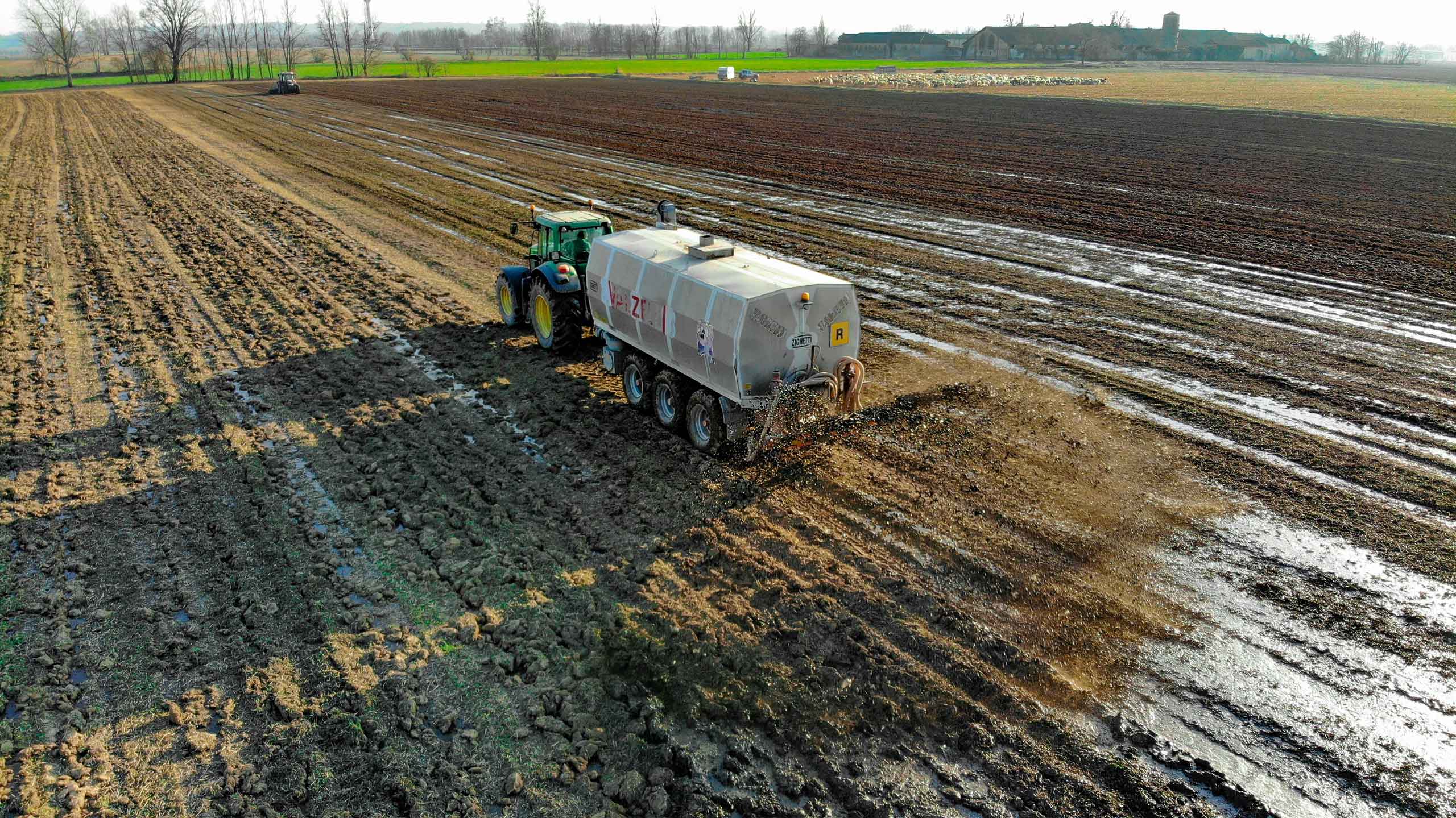
The NPK Trap
The agricultural input market in Lebanon is dominated by NPK compound fertilizers — 15-15-
15, 20-20-20, and similar blends. These assume every field needs nitrogen, phosphorus, and
potassium in equal proportions, which is almost never the case.
In Lebanese soils, phosphorus levels are often adequate or excessive, while micronutrient
deficiencies — zinc, boron, iron — are common in calcareous soils with pH above 7.5. The
solution is soil-test-based fertilization that costs a fraction of a single application and tells you
exactly what is needed.
Timing, Placement, and Form
Nitrogen applied to wheat at planting is largely wasted — the crop needs minimal nitrogen
during establishment but heavy nitrogen during stem elongation. Split applications improve
efficiency by 30–50%.
Broadcasting phosphorus on calcareous soils leads to rapid fixation. Banding near the root zone
or using fertigation dramatically improves availability. In drip-irrigated systems, fertigation allows
precise nutrient delivery directly to the active root zone.
Conclusion
Fertilizers are powerful tools when used with knowledge and precision. They become expensive
liabilities when applied by habit. The path to higher yields and lower costs runs through soil
testing, balanced nutrition, proper timing, and efficient delivery.
Key Takeaways
- Yield is limited by the scarcest nutrient — adding more of an already-adequate nutrient
does not help.
- Generic NPK fertilizers waste money by applying nutrients the soil may not need.
- Soil testing every 2–3 years should guide every fertilizer decision.
- Split applications and fertigation dramatically improve nutrient use efficiency.