
Introduction
Most crop disease management in Mediterranean greenhouses is reactive — farmers notice
symptoms and reach for a fungicide. By the time symptoms are visible, the pathogen has
already established, spread, and caused yield loss that no treatment can fully reverse. The
alternative — proactive cultural management that prevents infection before it starts — is both
more effective and dramatically less expensive.
This article focuses on the management practices, costing little to nothing, that reduce disease
pressure by 50–70% before any product is applied.
Understanding Disease Requirements
Most fungal pathogens require three conditions to infect: a susceptible host, a pathogenic
organism, and a favorable environment. While we cannot eliminate the pathogen from the
environment or always plant resistant varieties, we can manage environmental conditions to
prevent infection.
The critical environmental factors are leaf wetness duration, relative humidity, temperature, and
air movement. Botrytis cinerea, for example, requires at least 6 hours of continuous leaf
wetness at temperatures between 15–25°C to infect. Powdery mildew thrives at moderate
humidity without free water. Understanding these specific requirements for the diseases most
relevant to your crops guides which environmental factors to prioritize.
Ventilation: The Primary Tool
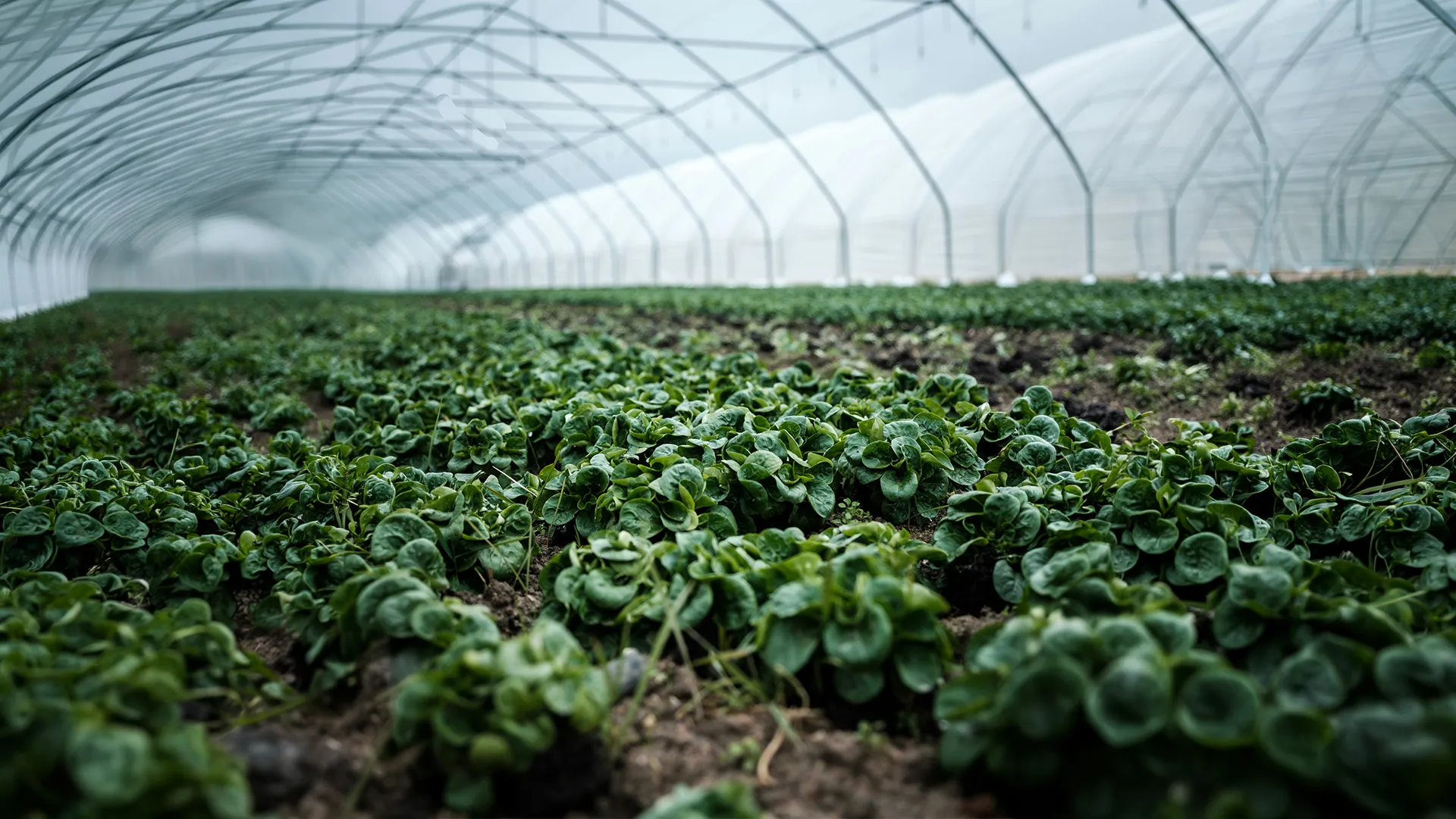
Proper greenhouse ventilation is the single most effective disease prevention practice available.
Opening vents reduces humidity, increases air movement through the canopy, and accelerates
drying of leaf surfaces after irrigation or condensation. Many greenhouse operators in Lebanon
under-ventilate out of concern for heat loss during winter — but the fungicide costs of resulting
disease outbreaks far exceed the heating costs of adequate ventilation.
Active ventilation using horizontal airflow fans further reduces humidity gradients within the
greenhouse. Continuous low-speed air movement is more effective than intermittent high-speed
ventilation.
Irrigation, Spacing, and Sanitation
Drip irrigation keeps foliage dry — eliminating the leaf wetness that foliar pathogens require.
The transition from overhead to drip typically reduces foliar disease incidence by 50–70% as a
standalone change.
Plant spacing that allows air circulation prevents humidity pockets within the canopy. Dense
plantings create microclimates with near-100% humidity even when the greenhouse average is
manageable.
Removing infected plant material — pruned leaves, dropped fruit, dead plants — removes
pathogen inoculum before it can reproduce and spread. This labor investment of 15 minutes per
greenhouse per day prevents exponential pathogen multiplication.
Conclusion
Cultural disease prevention is not an alternative to chemical management — it is the
prerequisite. Operations that manage their environment properly need far fewer fungicide
applications, and those applications are far more effective because they are treating
manageable rather than overwhelming pathogen pressure.
Key Takeaways
- Proper ventilation is the single most effective and lowest-cost disease prevention tool in
greenhouse production.
- Drip irrigation reduces foliar disease incidence by 50–70% compared to overhead
watering.
- Plant spacing and sanitation prevent the humidity and inoculum accumulation that drive
epidemics.
- Cultural prevention typically reduces fungicide requirements by 50–60% in well-
managed greenhouses.