Olives still on the tree: limit olive fly damage, protect your oil
Late-season olives face the highest fly numbers of the year. What to check, when to pick and press, and when a bait spray makes sense.
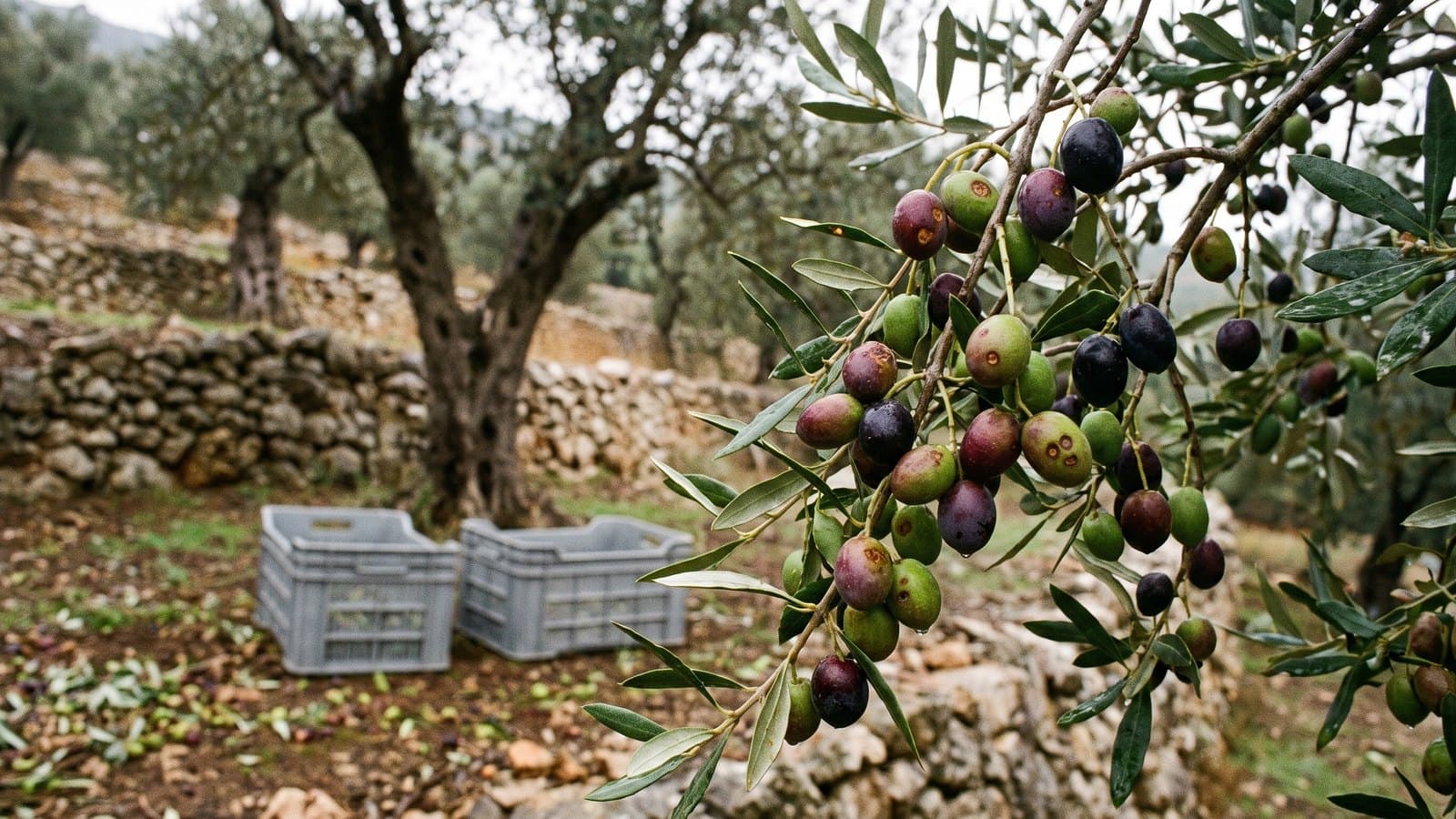
Across Lebanon, many olives are still on the trees at the end of October, especially in the mountains, where picking often runs into December. This is also when olive fly does the most damage.
Why late olives suffer most
Summer heat keeps olive fly in check. Numbers climb from late September as temperatures drop, and in a trapping study in Hasbaya, catches were still rising in November. Fruit left on the tree late in the season faces the highest numbers of the year.
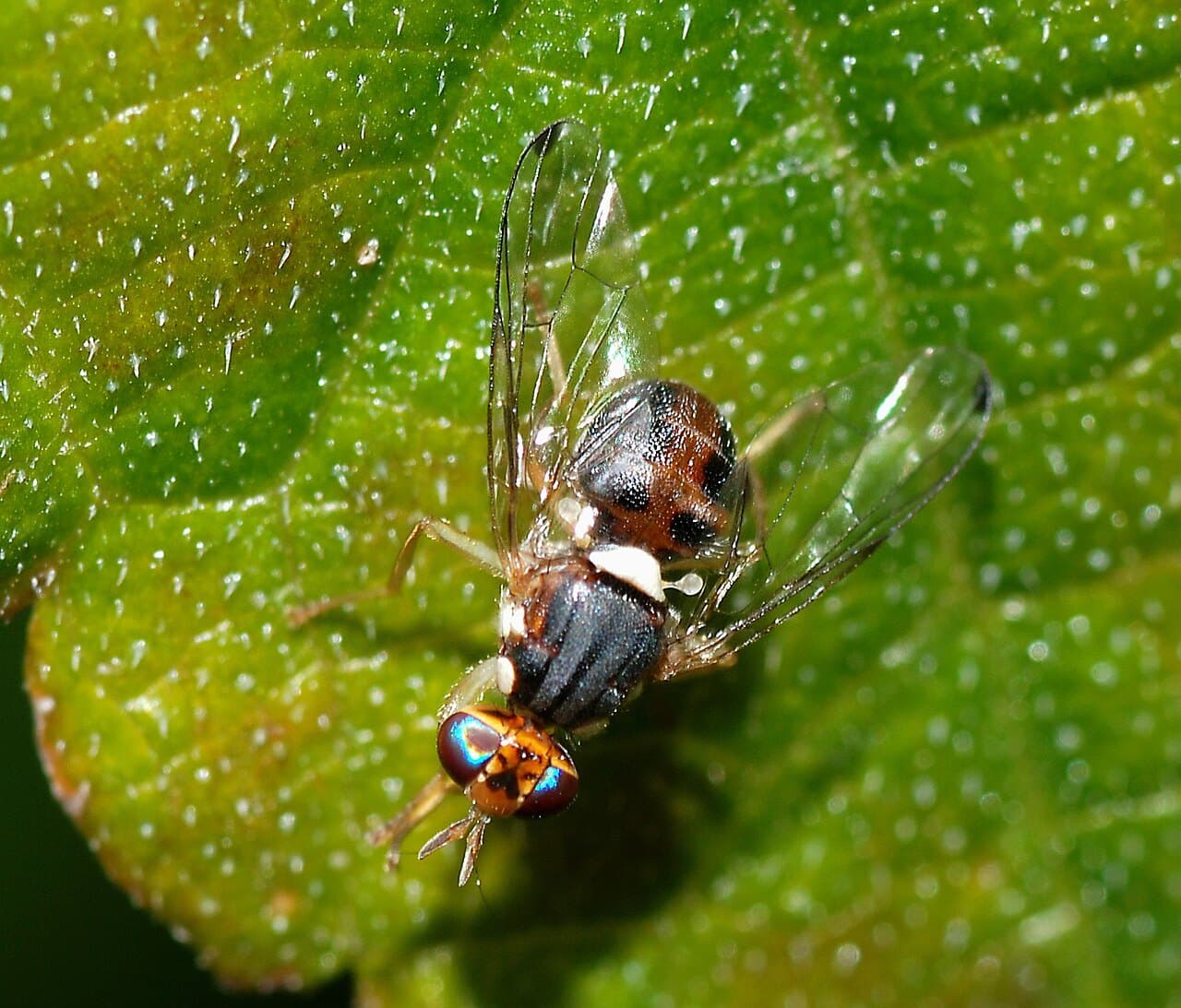
The female lays an egg under the skin of the olive. The larva tunnels through the flesh, and the tunnel lets in air and rot. Damaged fruit drops early, and the oil it gives has higher acidity and keeps less well. Once rot sets in, you can taste it.
Check before you decide
Walk the orchard and take olives from several trees and from different sides of each tree. Look for stings, small dark marks on the skin, and for exit holes. Cut a few fruits open: a tunnel with a small white larva inside means the attack is active.
If most of the fruit is sound, you have time to plan the harvest. If stings are common and rising, the decision is about the harvest date more than about spraying.
Pick earlier, press faster
- Pick as early as the crop allows. Olives picked as they turn colour are firmer, travel better and spend fewer weeks exposed to the fly.
- Get the fruit to the mill within 24 hours. Stung olives keep rotting after picking, and every day of waiting pushes acidity up.
- Use ventilated crates, not plastic sacks, and keep them in the shade. Heat and closed sacks speed up rot.
- Keep fallen olives apart. Fruit picked off the ground is usually the most damaged. Press it separately so it does not pull down the quality of the whole batch.
If the harvest is still weeks away
Where picking is still weeks off and stings are rising, a targeted treatment can protect the rest of the crop. The usual method is a bait spray: a food attractant mixed with an insecticide and sprayed on a small patch of each tree, not the whole canopy. The flies come to feed on it, so a small amount of product protects the tree, with far less impact on beneficial insects than a cover spray.
Two rules decide whether it makes sense:
- Use only a product registered in Lebanon for olive fly. Ask our agronomists which products are registered for it.
- Check the pre-harvest interval on the label. This is the number of days that must pass between spraying and picking. If you plan to pick sooner, do not spray.
Avoid full cover sprays this close to harvest. Fat-soluble pesticide residues concentrate in the oil, which is exactly where buyers test for them. Whatever you spray, wear the protective equipment the label asks for.
After the last tree is picked
The flies that survive this winter start next year's attack. They overwinter as adults, or as pupae in the soil and in fallen fruit.
- Strip every tree. Olives left hanging keep feeding the fly into the winter, especially at lower altitudes where winters are mild.
- Collect fallen olives and destroy them. Bury them at least 10 cm deep.
- Talk to your neighbours. Abandoned or unpicked trees nearby keep the population high for everyone. Olive fly control works best when a whole area acts together.
Next season starts in June
Traps to track the flies, kaolin clay to protect the fruit, and bait sprays from the first trap catches all belong to the summer. We will publish a full guide before the season starts.
Key Takeaways
- Olive fly numbers peak in autumn, so fruit left on the tree late in the season faces the most stings.
- Pick as early as the crop allows, carry olives in ventilated crates and get them to the mill within 24 hours.
- Spray only if the harvest is weeks away: a bait spray on part of each tree, with a product registered in Lebanon for olive fly, and only if its pre-harvest interval clears before picking.
- After harvest, strip every tree and destroy fallen fruit. That is where next year's attack starts.
Not sure whether your olives are still at risk? Send a photo of a few cut olives to our agronomists, or book a field visit and we will check the trees with you.