Snails and slugs after the first rains
The first autumn rains bring snails and slugs out at night. How to spot the damage, remove their hiding places and use bait pellets safely.
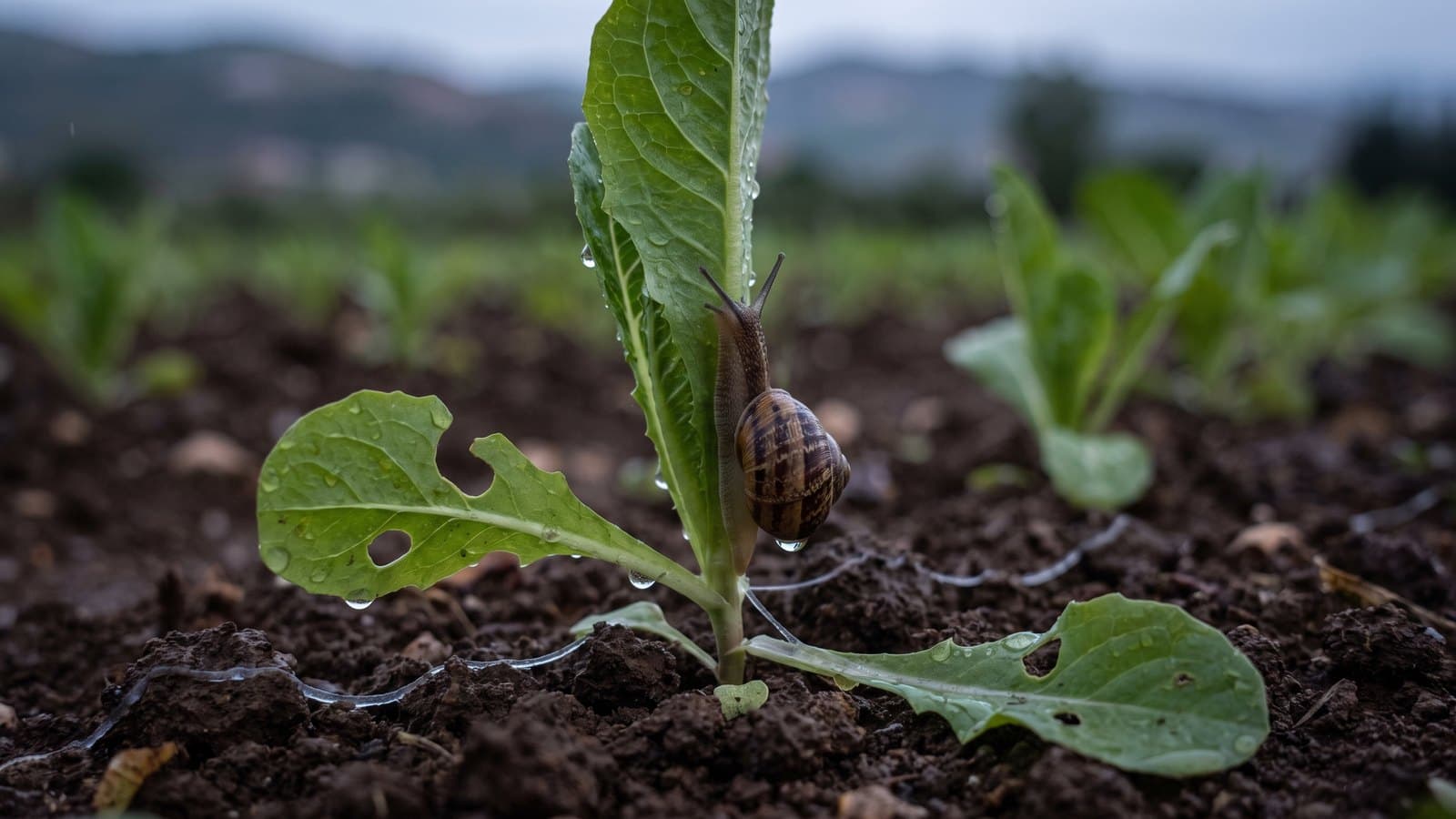
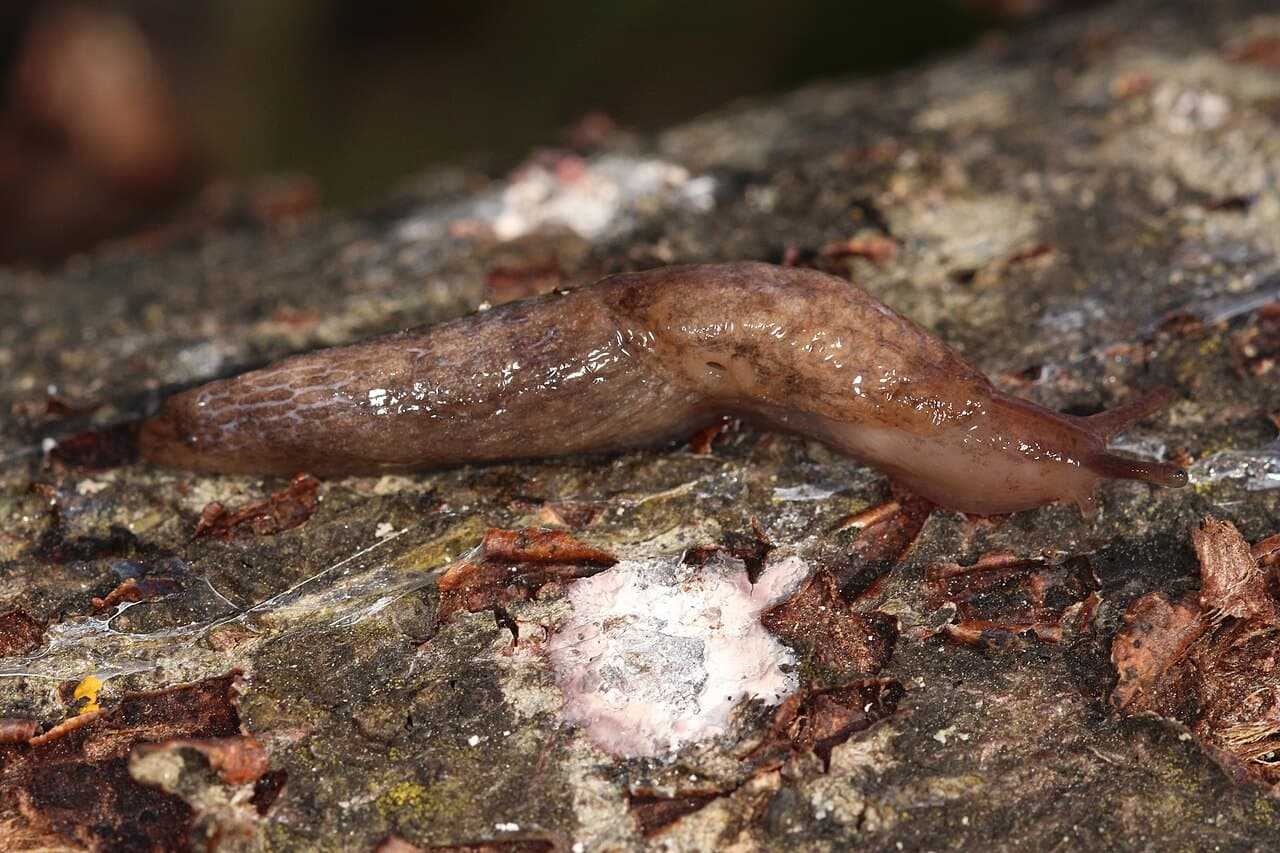
The first autumn rains wake up the snails and slugs that spent the summer hidden in the soil, under stones and along walls. Within days they are out at night, eating seedlings and young transplants down to the stem. A field can lose a new planting in a few nights, so the time to act is now, not when the damage is obvious.
Know the damage
Snails and slugs feed at night and on damp, cloudy days. By morning they are back in hiding, so growers often see the damage before they see the pests.
- Irregular holes in leaves, with smooth edges, often starting from the leaf margin
- Seedlings cut at the base or disappearing overnight
- Silvery slime trails on leaves, plastic mulch and the ground
Lettuce, cabbage, cauliflower, strawberries and anything in a nursery tray are at the top of their list. Young plants have the least leaf to lose, and they are the most expensive to replace.
Take away their hiding places
Snails and slugs spend the day where it is dark and damp. The fewer of those places near your crop, the fewer pests reach it.
- Clear weeds, plant debris, old boards and stones from field edges and around nursery benches.
- Keep the area around greenhouses and tunnels clean. Their edges are a favourite shelter.
- Water in the morning rather than the evening, so the soil surface is drier at night when they feed.
Check before you treat
Lay a few boards, tiles or wet sacks on the ground near the crop in the evening and lift them in the morning. Snails and slugs gather underneath. Count them, and remove them by hand if the plot is small.
This takes five minutes and tells you whether numbers are rising, where they come from, and whether your treatment is working.
Use bait pellets the right way
Where numbers are high, bait pellets give the fastest control. How they are used matters as much as the product.
- Scatter thinly, never in heaps. Spread the pellets evenly on moist soil around the plants and along the edges of the field. Heaps waste product and attract pets and birds.
- Apply in the evening, on mild damp days. That is when snails and slugs come out to feed.
- Follow the label rate and check how the product holds up in rain. Some pellets break down after heavy rain and need to be applied again.
- Protect animals and children. Metaldehyde, a common active ingredient in bait pellets, is poisonous to dogs, cats, birds and livestock. Keep children, pets and livestock away from treated areas, and store the product locked away. Put pellets on the soil, never on the leaves of vegetables, and respect the pre-harvest interval on the label. If a child or an animal may have eaten pellets, go to a doctor or vet at once and take the label with you. Baits based on iron phosphate are a lower-risk option where they are available.
Keep it up through the wet season
Snails and slugs stay active as long as the weather is damp and mild, and they return each time new seedlings go in. Check the boards every week, keep field edges clean and treat again only when the counts rise.
Key Takeaways
- Snails and slugs feed at night, so seedlings cut at the base and irregular holes in leaves are usually the first sign.
- Clear weeds, debris, boards and stones from field edges, and water in the morning rather than the evening.
- Lay boards out in the evening and check under them in the morning to see whether numbers are rising before you treat.
- Scatter bait pellets thinly on the soil in the evening, never in heaps or on leaves, and keep children, pets and livestock away. Metaldehyde is poisonous to animals.
Not sure what is eating your seedlings? Send a photo of the damage to our agronomists, or book a field visit.