After the olive harvest: copper against peacock spot and olive knot
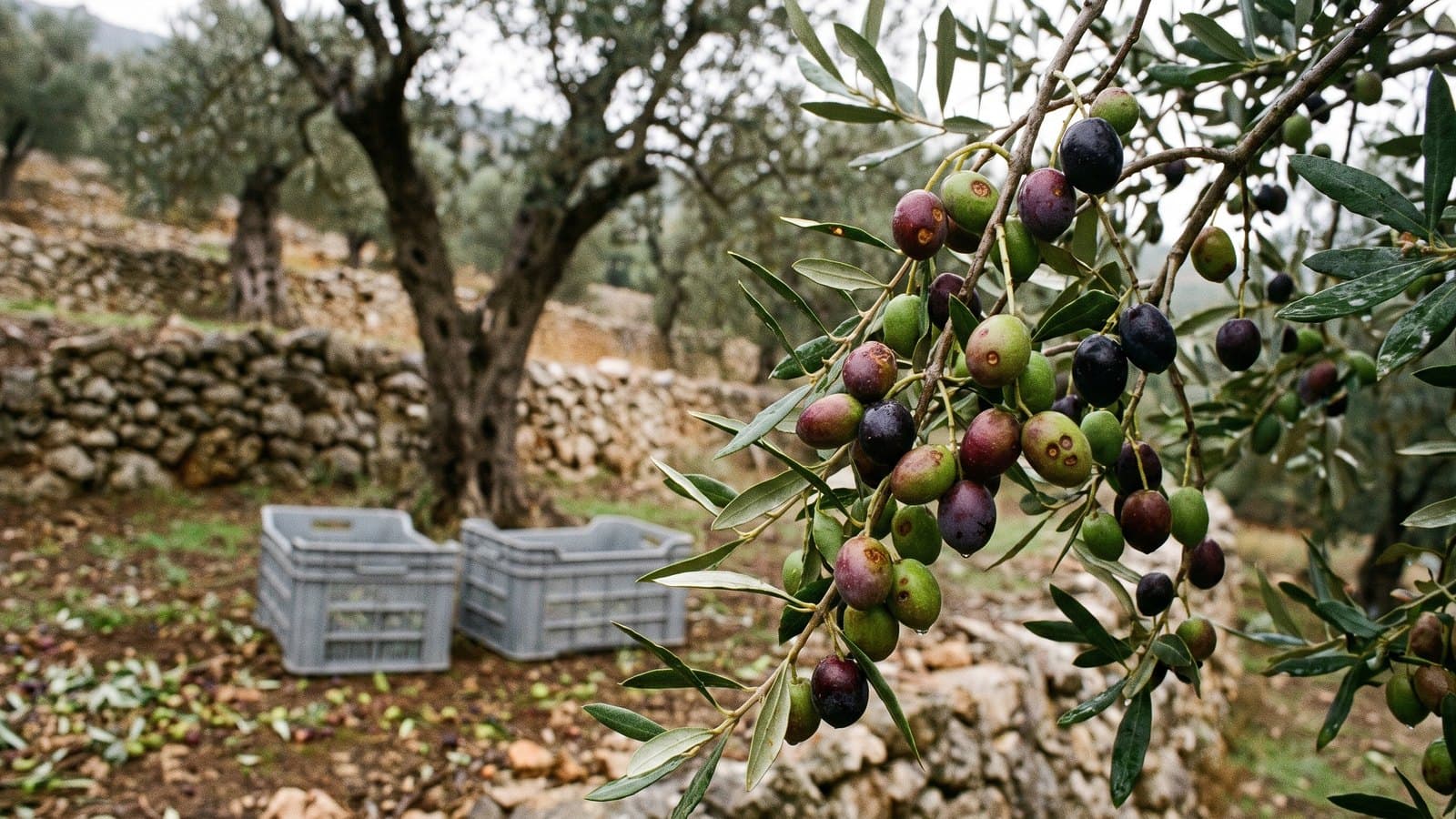
Harvest leaves olive trees full of small wounds just as the winter rains begin. Why and when a copper spray protects next year's crop.
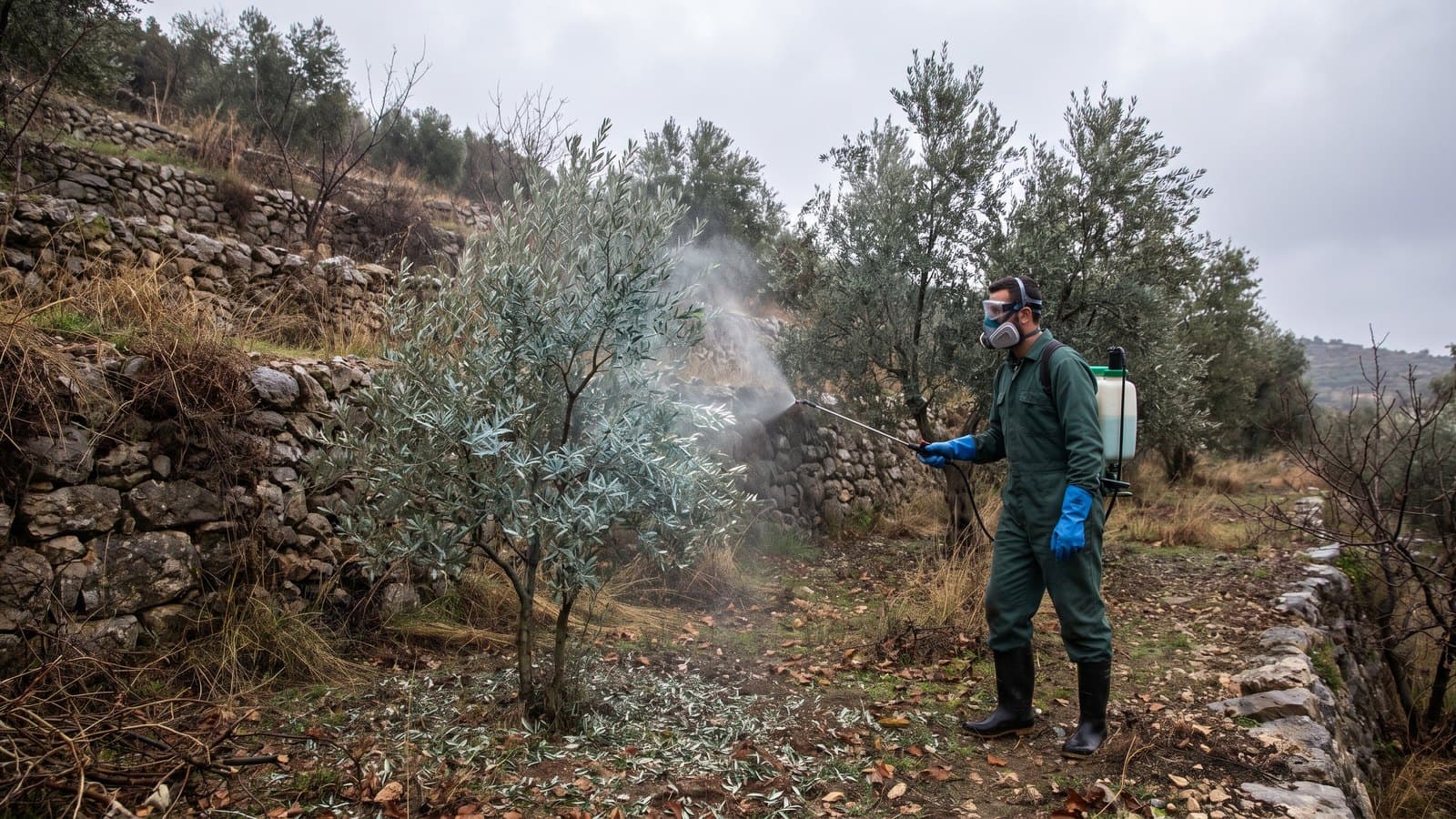
Many growers leave the orchard alone after harvest, yet this is when two diseases get their chance. Harvest leaves thousands of small wounds on the trees, and the winter rains carry disease into them. A copper spray at the right moment cuts that risk.
Peacock spot: the disease you see in spring
Peacock spot, also called olive leaf spot, is a fungal disease. It shows as round, dark spots on the upper side of the leaf, sometimes with a yellow ring around them, like the eye on a peacock's feather. Infected leaves turn yellow and fall.
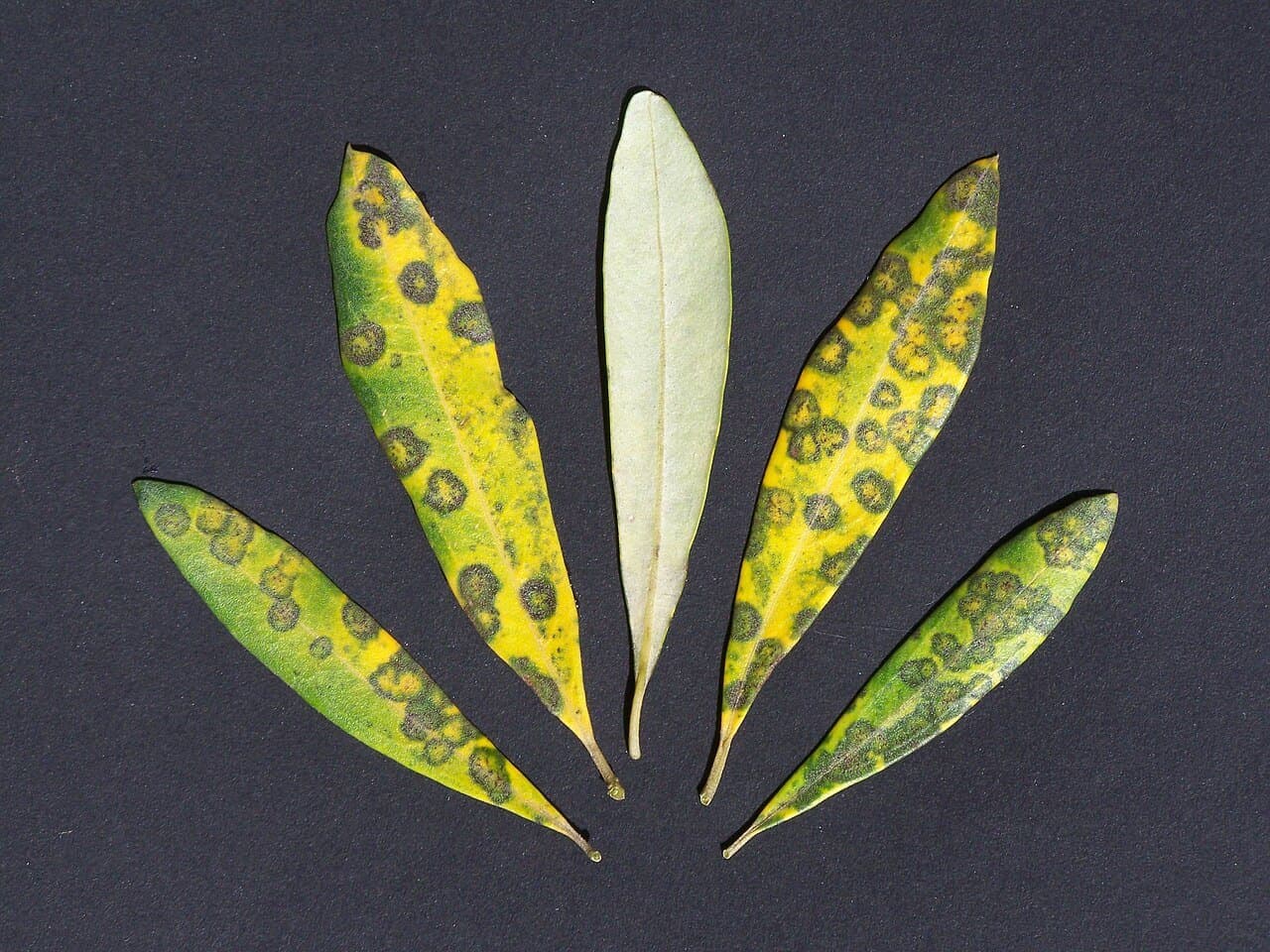
The damage is slow but expensive. A tree that loses many leaves over the winter has less strength to flower and set fruit, so a bad year of peacock spot shows up as a poor crop the year after.
The fungus needs wet leaves and mild weather to infect, which is why autumn and spring rains are the high-risk periods. Infections can sit hidden in the leaf for weeks before the spots appear.
Olive knot: the disease that enters through wounds
Olive knot is caused by a bacterium. It forms rough, woody swellings, or knots, on twigs and branches. Twigs above a knot often dry out and die, and a badly infected tree loses vigour year after year.
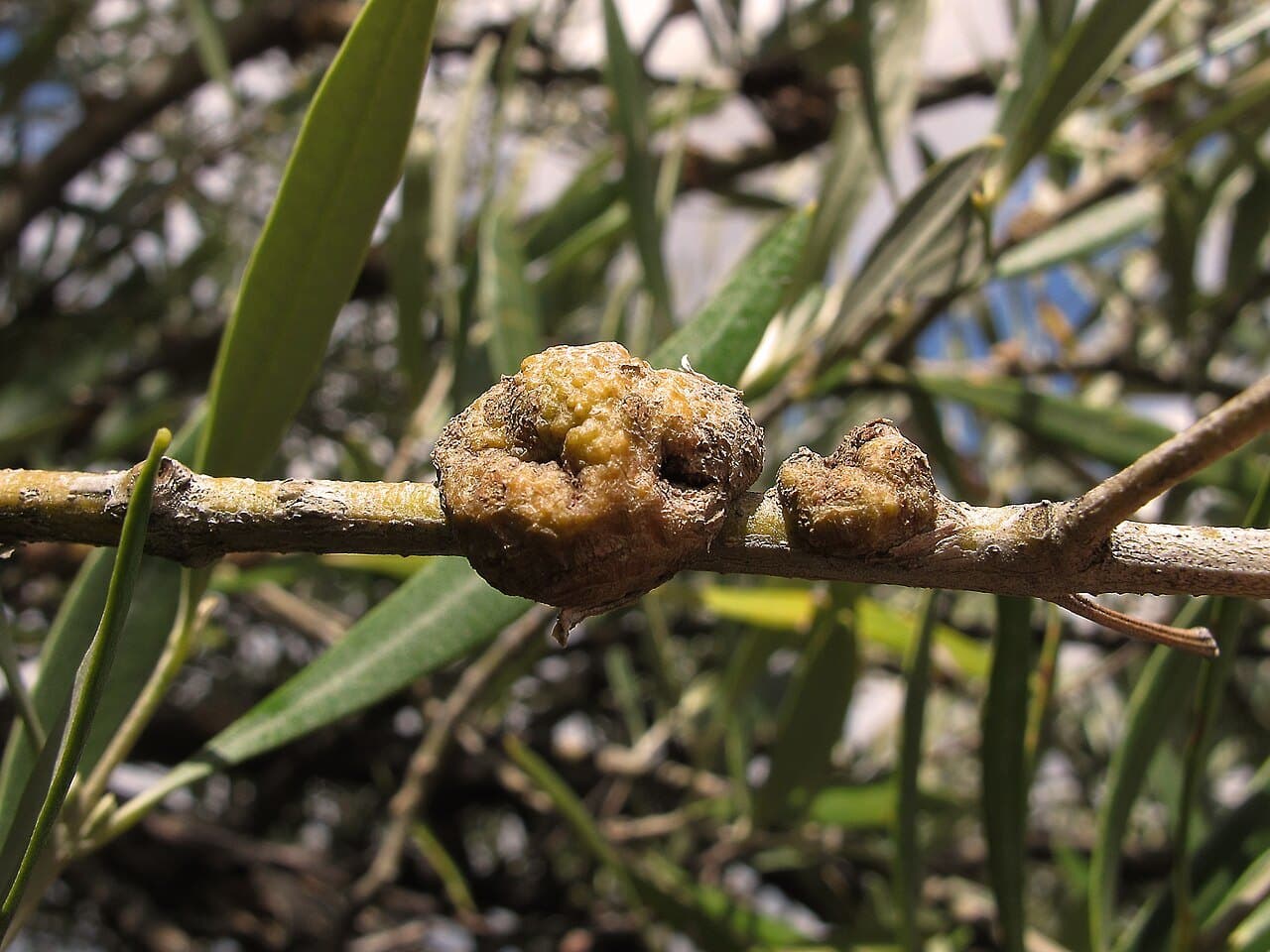
The bacterium cannot get into healthy bark. It needs a wound: a branch hit by a stick during harvest, a pruning cut, a leaf scar, or damage from hail or frost. Rain then splashes it from old knots into the new wounds. That is why the weeks after harvest, when the trees are full of fresh wounds and the rains begin, matter so much.
Why copper, and when
Copper protects the surface of leaves and wounds. It stops fungal spores and bacteria before they get in, but it cannot cure an infection that is already inside. Timing is therefore everything.
- Straight after harvest, in the first dry spell, ideally before the next rain. This spray protects harvest wounds and leaf scars, and covers the leaves going into the wettest months.
- In late winter or early spring, before new growth. This spray protects the leaves through the spring rains, the second high-risk period for peacock spot.
- After pruning, hail or frost. Any new wounds need covering before the next rain.
Spray the whole canopy, inside and out, until the leaves are evenly covered. Use the rate on the label: copper builds up in the soil over the years, and more is not better. Wear the protective equipment the label asks for.
Where peacock spot is already well established, a copper spray alone may not be enough. Some systemic fungicides can act on infections already inside the leaf. Ask an agronomist which products are approved for olive in Lebanon.
Habits that cut the risk
- Harvest gently. Beating branches with sticks wounds the twigs. Rakes, nets and shakers leave fewer entry points for olive knot.
- Prune in dry weather. Wet wood spreads bacteria. Cut out knotted twigs and remove them from the orchard.
- Clean your tools. Disinfect pruning shears and saws between trees, especially after cutting into knots.
- Open the canopy. A tree pruned to let in light and air dries faster after rain, and dry leaves do not get infected.
Key Takeaways
- Peacock spot is a fungus that strips leaves over the winter, so a bad year shows up as a poor crop the year after.
- Olive knot is a bacterium that can only enter through wounds from sticks, pruning, hail or frost.
- Spray copper straight after harvest in the first dry spell, again in late winter before new growth, and after any pruning, hail or frost.
- Copper protects but does not cure. Harvest gently, prune in dry weather and disinfect tools between trees.
Not sure whether your trees are infected? An agronomist can test leaves to reveal infections before the spots appear. Send a photo of spotted leaves or knotted twigs, or book a field visit.