Trichoderma and Bacillus at transplanting
Protect the roots from day one.
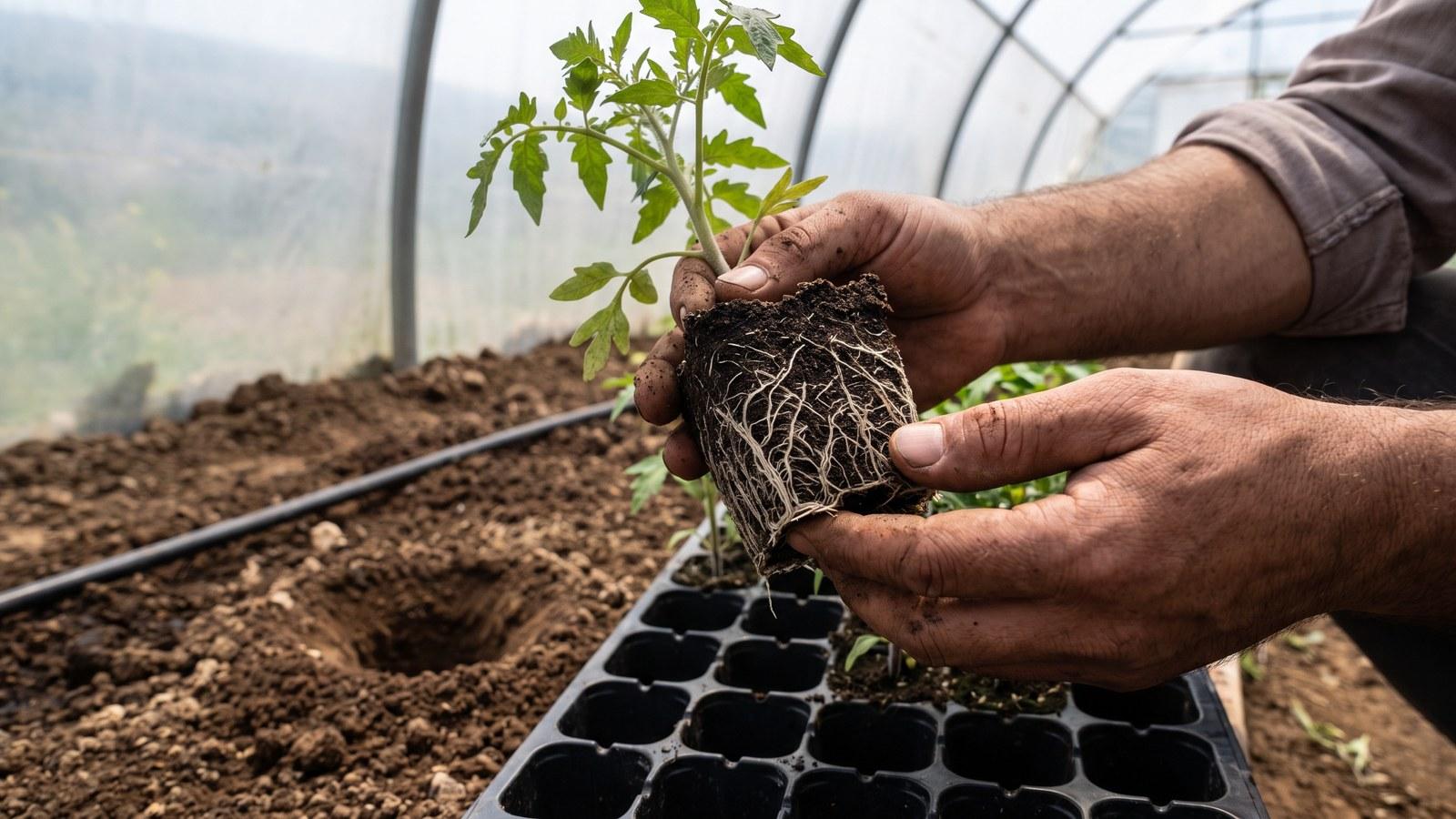
Many root problems in vegetables start in the nursery and the first weeks after transplanting. Damping-off and root rots caused by Pythium, Rhizoctonia and Fusarium kill seedlings or leave them weak, and once the roots are infected, no product brings them back. Biological fungicides based on Trichoderma and Bacillus work the other way round: they protect the roots before the disease arrives.
What they are
Trichoderma is a beneficial fungus that lives naturally in soil. Applied to the roots, it grows along them, takes the space and food that disease-causing fungi need, attacks some of them directly and encourages the plant to grow more roots.
Bacillus subtilis and related Bacillus species are beneficial bacteria. They settle on the root surface, release natural compounds that hold back fungal diseases, and switch on the plant's own defences.
Both are living organisms, and that shapes how they are used.
Timing is everything
Biological fungicides prevent; they do not cure. They need to be on the roots before the disease, so the best moments are in the nursery and at transplanting, when the root system is small and every root counts. A plant that is already wilting from root rot will not recover with a biological product.
How to apply them
- In the nursery: drench the trays before the seedlings leave, so they go out with roots already protected.
- At transplanting: dip the root ball in the solution or drench each planting hole, then irrigate to carry the product into the root zone.
- After planting: repeat through the drip system at the interval on the label. New roots keep growing, and they need protecting too.
- Mixing: mix only what you will use that day, in clean water, and apply it straight away.
Give them the right conditions
- Soil: both work best in moist soil above about 10°C, and very slowly in colder soil. Keep the root zone evenly moist after applying. Dry soil slows them down, and waterlogged soil favours Pythium.
- Chemical fungicides: some soil fungicides harm Trichoderma. Check both labels, don't mix them in one tank unless the label allows it, and leave a gap between a chemical soil treatment and a biological one.
- After soil disinfection: if you fumigate or solarise, apply the biological once the soil is ready to plant, so beneficial organisms move back in first.
Store them like living things
Keep biological products dry, out of the sun and below about 25°C, in a fridge if the label says so, and never in a hot car or a metal store in summer. Check the expiry date and buy what you need for the season, not more. Heat and old stock are common reasons for poor results.
What to expect
The results show as fewer seedling losses, more even stands and stronger roots, not as a dramatic change overnight. Biologicals work best as part of a program: healthy transplants, clean trays, good drainage, and chemical fungicides kept for the moments that need them.
Key Takeaways
- Apply early, in the nursery trays and at transplanting, as a dip or a drench.
- Repeat through the drip as new roots grow, at the interval on the label.
- Keep the root zone moist, and check the label before using them with chemical soil fungicides.
- Store them cool and dry, and use the mix the same day.
- They prevent, they don't cure. Used early, they mean fewer losses and stronger roots.
Not sure whether your roots need protecting, or which registered biological product suits your crop? Send a photo of your seedlings to our agronomists, or book a field visit.